Week 13
Dear Boss,
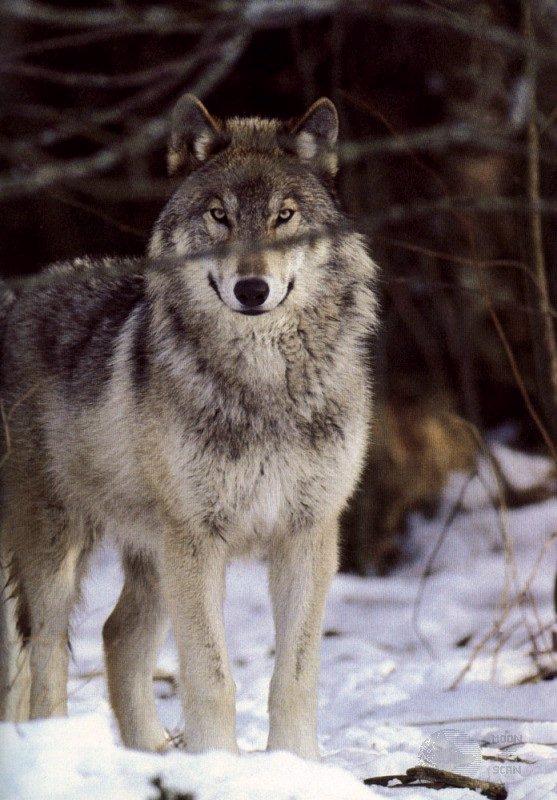
Here is how my species, the Grey Wolf, is classified:
• Kingdom: Animalia
• Phylum: Craniata
• Class: Mammalia
• Order: Carnivora
• Family: Canidae
• Genus: Canis
• Species: lupus
Wolves have developed many features that have helped them adapt to the many environments they can be found in all over the world.
One of the wolves’ adaptations is their howling. Howling plays a very important role in a wolf pack. Wolves use howling to communicate with and find each other over long distances. It can also be used to challenge other wolves or warn other packs to stay away.
Wolves also use their tails to communicate. This is another one of the wolves’ great adaptations. By moving their tails in certain ways or placing them in certain positions, wolves can express emotions such as anger or submission. Such communication helps wolves understand each other and their positions within or outside of the pack.
One more interesting adaptation of the wolves is their paws. A wolf’s paws are equipped with scent glands, located between the toes. These glands leave a scent wherever they go that serves to identify them to other wolves.
The first adaptation in particular proposes a problem. Many people may become annoyed by the constant howling of wolves if they live in an area that wolves frequent. I think it would be highly profitable for our company if we were to solve this problem using selective breeding. We could find wolves that howl less loudly, and by breeding them and their offspring we could then produce over time many wolves that howl more softly.
However, there are many things that we will need to research before beginning this experiment. First of all, would wolves even breed in captivity? Would we need to keep them in their traditional pack system? It is difficult to know yet how this would work.
There is the possibility that if we follow through with this selective breeding project, it may result in us creating a new species of wolf. A new species is formed when a population splits from another population and eventually refuses or is unable to breed with the original population or have viable offspring. In the case of the wolves, perhaps wolves give preference in breeding to wolves with louder howls. If this were the case, then wolves with the preference for louder howls would refuse to breed with the wolves with softer howls, therefore resulting in a divergence of species.
It would be prudent to consider well the consequences this plan might have before proceeding with it. Would this type of selective breeding be, in fact, ethical? Allow me to explain. Because the howling of the wolves is so integral to their communication, altering the volume of their howls could damage their social patterns. Perhaps they would no longer be able to communicate as well over long distances, which would result in wolves becoming lost, or even wolf packs fighting with each other more often as the distance from which a wolf could respond to or issue challenges would be dramatically decreased. In conclusion, it might not be wise or ethical to enact this selective breeding program for wolves.
Sincerely,
Rachel Magruder
Sources:
NatureServe. 9 November 2006. Comprehensive Report Species - Canis lupus. <http://www.natureserve.org/explorer/servlet/NatureServe?searchName=Canis+lupus>. 22 April 2007.
Animal Planet. 24 May 2006. Corwin’s Carnival of Creatures. <http://web.archive.org/web/20060524181949/http://animal.discovery.com/fansites/jeffcorwin/carnival/lilmammal/wolf.html>. Downloaded 22 April 2007.
Fred H. Harrington. November 2000. Nova Online: Wild Wolves: What’s in a Howl? <http://www.pbs.org/wgbh/nova/wolves/howl.html>. Downloaded 22 April 2007.
Here is how my species, the Grey Wolf, is classified:
• Kingdom: Animalia
• Phylum: Craniata
• Class: Mammalia
• Order: Carnivora
• Family: Canidae
• Genus: Canis
• Species: lupus
Wolves have developed many features that have helped them adapt to the many environments they can be found in all over the world.
One of the wolves’ adaptations is their howling. Howling plays a very important role in a wolf pack. Wolves use howling to communicate with and find each other over long distances. It can also be used to challenge other wolves or warn other packs to stay away.
Wolves also use their tails to communicate. This is another one of the wolves’ great adaptations. By moving their tails in certain ways or placing them in certain positions, wolves can express emotions such as anger or submission. Such communication helps wolves understand each other and their positions within or outside of the pack.
One more interesting adaptation of the wolves is their paws. A wolf’s paws are equipped with scent glands, located between the toes. These glands leave a scent wherever they go that serves to identify them to other wolves.
The first adaptation in particular proposes a problem. Many people may become annoyed by the constant howling of wolves if they live in an area that wolves frequent. I think it would be highly profitable for our company if we were to solve this problem using selective breeding. We could find wolves that howl less loudly, and by breeding them and their offspring we could then produce over time many wolves that howl more softly.
However, there are many things that we will need to research before beginning this experiment. First of all, would wolves even breed in captivity? Would we need to keep them in their traditional pack system? It is difficult to know yet how this would work.
There is the possibility that if we follow through with this selective breeding project, it may result in us creating a new species of wolf. A new species is formed when a population splits from another population and eventually refuses or is unable to breed with the original population or have viable offspring. In the case of the wolves, perhaps wolves give preference in breeding to wolves with louder howls. If this were the case, then wolves with the preference for louder howls would refuse to breed with the wolves with softer howls, therefore resulting in a divergence of species.
It would be prudent to consider well the consequences this plan might have before proceeding with it. Would this type of selective breeding be, in fact, ethical? Allow me to explain. Because the howling of the wolves is so integral to their communication, altering the volume of their howls could damage their social patterns. Perhaps they would no longer be able to communicate as well over long distances, which would result in wolves becoming lost, or even wolf packs fighting with each other more often as the distance from which a wolf could respond to or issue challenges would be dramatically decreased. In conclusion, it might not be wise or ethical to enact this selective breeding program for wolves.
Sincerely,
Rachel Magruder
Sources:
NatureServe. 9 November 2006. Comprehensive Report Species - Canis lupus. <http://www.natureserve.org/explorer/servlet/NatureServe?searchName=Canis+lupus>. 22 April 2007.
Animal Planet. 24 May 2006. Corwin’s Carnival of Creatures. <http://web.archive.org/web/20060524181949/http://animal.discovery.com/fansites/jeffcorwin/carnival/lilmammal/wolf.html>. Downloaded 22 April 2007.
Fred H. Harrington. November 2000. Nova Online: Wild Wolves: What’s in a Howl? <http://www.pbs.org/wgbh/nova/wolves/howl.html>. Downloaded 22 April 2007.
posted by Rachel at
9:49 PM